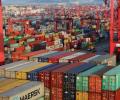
Shipments from Russia rose nearly 33 per cent to $1.1 billion in March from $831.17 million in the previous month, which was when the country mounted aggression on Ukraine and faced sanctions from Western nations, the data accessed by Business Standard shows. Growth in imports was largely on account of oil, people aware of the matter said. The Department of Commerce is learnt to have written to the Ministry of Petroleum and Natural Gas (MoPNG), seeking details of imports, including the payment mechanism, which India has not made public.

There has been a 45 per cent growth in 'active internet users' in rural India since 2019, according a study by Nielsen, a global company for audience measurement, data and analytics. The Bharat 2.0 Internet report said that female active internet users grew by 61 per cent since 2019. The report said that India has 646 million active Internet users aged 2 years and above as of December 2021. Rural India has 352 million internet users--almost 20 per cent higher than urban.

This will be done across five cities - Delhi, Bengaluru, Coimbatore, Bhopal, and Shillong. Thereafter, it will be scaled up and launched in 100 cities over a period of six months, said a senior government official.

The job market saw an uptrend in the March quarter (Q1), with job interviews increasing 13.71 per cent quarter-on-quarter (QoQ) to over 30 million, according to Apna.co, India's largest jobs and professional networking platform. It recorded a 42 per cent QoQ growth in its employer base. As a result of the second wave of Covid-19 last year, sectors such as healthcare, delivery, and e-commerce were booming while others had fairly low employment.

Nepal's decision to ban the import of non-essential items amid depleting forex reserves may hit Indian exports. The country's central bank - Nepal Rastra Bank - last week instructed commercial banks not to open letters of credit (LCs) for importing non-essential items. This is to prevent further decline of the country's foreign exchange reserves. However, it has not issued any formal communication yet.

Since then, 129 startups have joined this star status, of which 100 were added from January 2019, generating a total value of $535 billion. Entrepreneurs are building bigger enterprises at a faster rate -- 50 per cent of the 130 companies reached unicorn status in the first five years after their initial institutional fundraising.

The Centre is unlikely to announce an agreement over payment mechanism with Russia until a ceasefire is declared in the Ukraine war, said people in the know. An inter-ministerial group headed by the finance ministry has been meeting regularly for over a month to analyse and discuss payment mechanisms that can work under the current circumstances and ensure the trade between India and Russia is not disrupted. The US had recently said that there would be consequences for countries actively attempting to "circumvent or backfill" American sanctions against Russia.

Thousands of small brands are ruling the consumer market despite the predatory pricing and deep discounting by foreign e-commerce companies and efforts of certain FMCG companies to sideline the distributor network, said the Confederation of All India Traders (CAIT), which represents about 70 million traders in the country. "If the government gives support policies to non-corporate sector and tighten the e-commerce companies to obey the policy and the law both in letter and spirit, the retail trade of the country is bound to blossom in pursuance of the vision of PM Narendra Modi for Make in India and Atmnirbhar Bharat," said CAIT national president BC Bhartia and secretary general Praveen Khandelwal.

Ola founder and chief executive officer (CEO) Bhavish Aggarwal will step back from day-to-day operations to focus more on engineering functions, team building, and products, apart from focusing on long-term strategic projects, such as two-wheelers, cars, and innovations in quick commerce and international expansion. "I'll be spending more time with all engineering functions, team building, and on products," said Aggarwal in an internal note, adding, "I'll also be increasing my focus on our longer-term strategic projects, including new two-wheeler products, our car project, innovations in quick commerce, electrifying ride-hailing, our cell research and development (R&D), international expansion, building our Pune technology (tech) centre, and Futurefoundry UK." To drive scale, speed, and quality, Aggarwal said he is expanding Ola Group's chief financial officer (CFO) G R Arun Kumar's role to help him steer 'day-to-day operations' across the group.

SoftBank-backed internet commerce firm Meesho has downsized its grocery vertical Meesho SuperStore (formerly Farmiso) in an attempt to drive efficiency. The Bengaluru-based firm did not reveal the number of laid-off employees. However, the company officials said that about 150 employees have been laid off.

Food delivery apps Zomato and Swiggy reported a nationwide outage on Wednesday. Both the platforms witnessed technical glitches and were unresponsive for almost an hour. Downdetector, a platform that collects status reports from a series of sources, recorded about 3,619 reports of outage against Zomato at 2:05 PM and about 771 reports of outage against Swiggy at around 2:21 PM. According to the sources, the outage was caused by Amazon Web Services (AWS), a cloud-services platform, which runs both platforms. Though Swiggy and Zomato are working now, some customers reported that the issue has not been solved completely and they are not able to place orders and there are payment related issues.
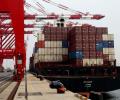
Economic recovery from the pandemic in the US has helped India achieve the $400-billion mark for exports for the first time in any fiscal year. According to the preliminary data compiled by the Department of Commerce, India exported goods worth $73 billion to the US from April 1 to March 21 - up 47 per cent, compared to last year. The US' share of exports, compared to total exports, stood at 18.2 per cent. The country is also India's largest trading partner and export destination.
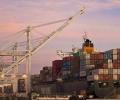
Exporters are readying back-up routes to send their shipments to the nations belonging to the Commonwealth of Independent States (CIS), including Russia, as the war in Ukraine continues to intensify. Three routes are being explored. The first is the China route using Qingdao port. The second is the International North-South Transport Corridor (INSTC) route that connects Mumbai to Moscow via Iran and Azerbaijan.

Located in a small township in the eastern part of Bengaluru is IBM's new Security Command Centre, which is surrounded by offices of multinational tech companies. This unit is the centrepiece of IBM's multi-million dollar investment to help businesses prepare for the growing threat of cyberattacks across the Asia-Pacific (APAC) region. This facility is the first of its kind in the region. It helps train in cybersecurity response techniques through highly realistic and simulated cyberattacks.

India is looking to develop alternative export markets for tea such as Iraq, Saudi Arabia, the US, Japan and Tunisia in view of the Russian invasion of Ukraine, people aware of the matter said. Meetings are being held with buyers in some of these countries in virtual mode, with the help of diplomatic missions located there. Similar meetings for the remaining countries have also been planned.

India's exports are unlikely to get an immediate boost from a depreciating rupee, which touched an all-time low on Monday, driven by rising commodity prices. The rupee fell to 76.97 against the dollar earlier in the day, settling 1.05 per cent weaker than the previous close. Oil prices soared to their highest since 2008 on Monday at $139 per barrel, after the US and European allies explored a Russian oil import ban, while delays in the potential return of Iranian crude oil to global markets increased supply fears.

The apparel and engineering sectors have already witnessed the trend in the past one week. If this continues, it can have an impact on the overall export demand in the coming months, considering that Europe is the largest national export market for India.
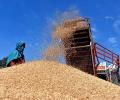
India is looking to tap its diplomatic missions abroad to enable grain exporters in the country to ship out wheat and corn as supplies from Russia and Ukraine are expected to remain disrupted for some time to come. Between the two items, pushing for wheat is easier because of a huge domestic surplus. "We are hand holding our exporters and support from various Indian missions abroad is also being channelised accordingly," a senior government official said. Global wheat prices have jumped since the Ukraine crisis started, with wheat futures in the US reaching their highest levels since 2008.

The government may soon give the green light to bilateral trade between Russia and India in their national currencies to avoid any trade disruptions, multiple people aware of the matter said. While the Department of Commerce has recommended the proposal, an announcement is likely to be made by the finance ministry after further deliberations between the Department of Economic Affairs and Department of Financial Services. "The finance ministry will take a call on how to peg the two currencies," a senior government official told Business Standard. In the past, the two nations have had rupee-rouble trade, and when such an arrangement is implemented again, it will bypass the sanctions imposed on Russia by the West.

Nearly five months after its soft launch, the government's e-portal, the National Single Window System (NSWS), is seeing a significant increase in the number of investors using it to get a bunch of approvals for their ventures. The first clearance was granted on 18 January. Since then, the progress has been good. Out of the 1,258 registered users on the portal, 378 were registered in the last one week.
 © 2026 Rediff.com - Advertise with us - Disclaimer - Privacy Policy - Sitemap - Feedback - About us - Terms of use - Grievances